
Rolling Twins: Music Ball Rush
Cobby LabsMusic
4.6245.00 Reviews
- Version
- 0.3.2
- Installs
- 50.00M
- Age Rating
- Everyone
Screenshots
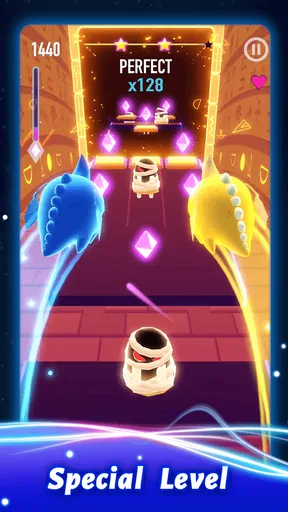
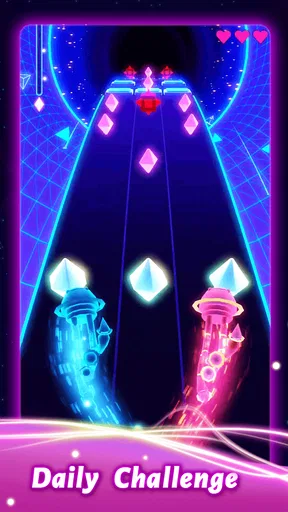




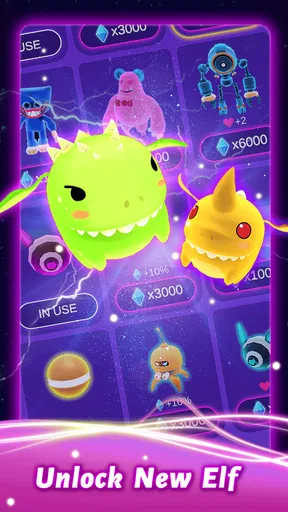
Our Review of Rolling Twins: Music Ball Rush
 Analysis by Appyee
I first noticed Rolling Twins: Music Ball Rush because it sits in an appealing space between a music game and a quick reflex challenge. It is a free game from Cobby Labs, built around moving balls, piano-tile-style timing, and a mix that includes K-pop-flavored music games. That combination makes it easy to understand within seconds, but it also gives the game a particular rhythm that is different from a traditional piano-tile app.
My experience with it is best described as short, energetic, and immediately accessible. I can pick it up when I have only a few minutes, play without a long tutorial, and hand the device to someone else without needing to explain a complicated control scheme. At the same time, the simple presentation should not be mistaken for unlimited depth. The enjoyment depends heavily on whether you like repeating musical patterns, improving reflexes, and trying again after a mistake.
How Rolling Twins works in everyday play
The central appeal is the connection between movement and music. Instead of treating the soundtrack as background decoration, the game asks me to react in time while guiding the rolling action. The piano-tile influence gives the experience a familiar visual language: watch the sequence, follow the beat, and avoid losing concentration as the pace becomes more demanding.
That makes it especially suitable for a shared household device. Someone can play a short round while another person watches, then swap places without a lengthy setup. I can imagine using it during a quiet break at home, with one player trying to keep a run alive and another suggesting when to stay calm rather than tapping too quickly. It works well as a casual pass-and-play experience, even though it is still designed around individual control rather than a dedicated multiplayer session.
The strongest part of this arrangement is the immediate feedback. A successful sequence feels satisfying because the visual motion and musical timing reinforce each other. When I miss, the reason usually feels understandable: I reacted early, lost the rhythm, or let the changing path distract me. That clarity encourages another attempt instead of making the failure feel random.
There is also a useful distinction between playing for relaxation and playing for improvement. For a relaxed session, I can focus on the music and enjoy the rolling presentation. For a more competitive household moment, I can treat each attempt as a personal challenge and see whether I can stay consistent for longer. The game supports both attitudes without requiring a separate mode or a large amount of preparation.
Why the shared-device scenario works
On a family or household phone, the low barrier to entry is a real advantage. A person who has never played a rhythm game can understand the basic idea quickly. A younger player may enjoy the colorful motion, while an older player may be more interested in keeping a clean sequence. The same round can therefore be entertaining for different reasons.
Still, I would set expectations before handing over the device. This is not a board game with turns, built-in conversation, or a shared goal. It is closer to taking turns with a personal arcade challenge. If everyone understands that boundary, the experience is smooth. If someone expects cooperative play, the game may feel narrower than its lively presentation suggests.
A practical routine is to agree on a simple turn rule before starting: one attempt each, then pass the phone. That prevents a skilled player from holding the device indefinitely and makes the game feel fairer on a shared screen. It also reduces the temptation to turn a casual break into a long sequence of retries.
Setup, device boundaries, and first impressions
The game is free to download, which makes it easy to try without turning a household discussion into a purchase decision. It is listed for Everyone, and its basic concept is approachable enough for a broad age range. Even so, an age label should not replace normal supervision. The important question is not only whether someone can understand the controls, but also whether the speed, repetition, and competitive feeling suit that person.
Rolling Twins runs on Android starting with version 6.0, so it is not limited to only the newest phones. The current version is 0.3.2. On a shared device, I would still check that the phone has enough battery and that the screen is comfortable to use before starting a longer session. Rhythm-style play is much less enjoyable when the device is being held awkwardly or when notifications interrupt attention.
One boundary I consider important is separating the game from personal accounts and personal expectations. If several people use the same phone, it is better to treat each attempt as a casual session unless the game clearly offers a way to distinguish players. I would not assume that progress, records, or preferences are automatically separated for different household members. Keeping that expectation modest avoids arguments about whose result belongs to whom.
The same applies to younger players. I would explain that the game is free, but I would not treat that as a guarantee that every aspect of the experience is suitable for unsupervised use. A parent or device owner should remain responsible for the phone’s general settings and any store-level purchase protections. The game itself should not be used as a substitute for those household boundaries.
Music, timing, and the learning curve
The music-game identity is what gives the title its personality. The K-pop connection makes the presentation feel more current than a plain tile-tapping exercise, while the ball movement adds a sense of travel and momentum. I like that the visual action gives my eyes something to follow instead of leaving me with a static grid.
That visual energy can also become the main source of difficulty. New players may watch the ball too closely and lose the underlying beat, or listen to the music while failing to notice the next visual change. My most useful adjustment was to choose one primary cue at a time. When the sequence became busier, I paid more attention to the immediate path and used the music as timing support rather than trying to process every element equally.
This is one of the less obvious strengths of the game: it can encourage a small but meaningful change in attention. I am not simply tapping quickly. I am learning to anticipate a pattern, maintain a steady pace, and avoid panic when the screen becomes more active. That makes repeated attempts feel more purposeful than random retries.
However, the learning curve will not suit everyone. Players who want a calm music app may find the reflex demand tiring. Players who prefer deep rhythm systems, detailed note charts, or extensive customization may find the experience comparatively light. Rolling Twins is better understood as an approachable arcade interpretation of music gaming, not as a substitute for a serious rhythm-training title.
Coordination when several people use the same phone
Household use brings a coordination issue that is easy to overlook: the game requires concentration, but spectators may naturally talk, comment, or reach for the device. In my view, the best shared sessions happen when the person playing gets a quiet attempt and feedback comes afterward. Calling out instructions during a sequence can make the player react to the voice instead of the rhythm.
A useful arrangement is to give one person the role of observer. The observer can notice whether the player is rushing, losing the beat, or holding the phone in a way that makes control uncomfortable. This turns watching into something constructive without pretending that the game is cooperative. It also makes it easier for a less experienced player to improve without feeling pressured to perform perfectly.
For siblings or friends, I would avoid comparing only the highest result. A better household challenge is consistency: who can complete the most attempts without rushing, or who can recover best after a difficult section? That approach keeps the focus on the game’s timing rather than turning a short music session into a contest that frustrates the least experienced player.
Another practical tip is to use headphones only when the device owner is comfortable with that arrangement. Music timing can be easier to follow privately, but headphones reduce the social part of a shared session and may make it harder for others to notice when the player needs help. Without headphones, everyone can participate in the atmosphere, though background noise may make timing more difficult.
Age, trust, and realistic expectations
The Everyone rating reflects the approachable nature of the concept, and I think the game can work well for children, teenagers, and adults who enjoy quick musical challenges. The more important age question is maturity around repetition and competition. Some players are happy to restart immediately after a mistake; others become frustrated when a nearly successful attempt ends suddenly.
For younger users, I would frame the game as a short activity rather than an endless task. That is not because the game is inherently unsuitable, but because rhythm challenges can encourage “one more try” behavior. A simple household limit, such as playing for a defined break and then putting the phone down, helps keep the experience balanced.
Trust also matters on a shared device. I would make clear who owns the phone, who is allowed to change settings, and whether other people may use it without asking. Those are household rules rather than game features, but they directly affect how pleasant the experience becomes. A title that is easy to pass around can still create friction if nobody agrees on access.
The game’s broad appeal is therefore strongest in homes where the device boundary is already understood. It is a good choice for a casual shared moment, but it is not a replacement for a family account system, a child profile, or a carefully separated personal gaming setup. Anyone who needs strict progress separation or detailed supervision should choose a platform that provides those tools at the device or account level.
How it compares with other music games
Compared with conventional piano-tile games, Rolling Twins feels more kinetic because the rolling ball gives the action a sense of direction. That can make the game more visually engaging, especially for players who find a flat tile layout repetitive. The trade-off is that the extra motion may demand more visual attention and can feel less immediately tidy than a simple vertical tile stream.
Compared with full rhythm games, it is easier to start and less intimidating. I do not need to learn a large set of symbols or spend time understanding a complex scoring system before enjoying a round. The downside is that players looking for deep song mastery, elaborate progression, or highly technical note patterns may eventually want something more specialized.
It also differs from ordinary ball games because timing and music are central to the experience. A purely physics-focused game might reward planning movement or solving spatial problems, while this one places more weight on reaction and rhythm. That makes it a better fit for someone who wants a musical arcade session, and a weaker fit for someone seeking puzzles, exploration, or a long narrative.
The K-pop-oriented flavor is another deciding factor. If that style of music-game presentation appeals to you, it gives the title a clear identity. If you prefer instrumental practice, licensed song libraries, or complete control over the soundtrack, you may prefer a dedicated music app or a more advanced rhythm game instead.
Small habits that improve the experience
My first recommendation is to begin with relaxed hands. Gripping the phone tightly makes quick corrections harder and encourages premature taps. A light hold gives me more control and reduces fatigue during repeated attempts. This is especially useful when several people are sharing the same device, because not everyone will have the same hand size or playing style.
Second, I would avoid judging the game after a single failed run. The first attempt is often spent learning how the visual motion relates to the music. A second or third try gives a clearer picture of whether the challenge feels satisfying or merely stressful. The important test is whether I can identify what went wrong and adjust, not whether I succeed immediately.
Third, I would lower the surrounding distractions before a serious attempt. A television, conversation, or notification can break concentration at exactly the wrong moment. For a casual household round that may not matter, but for anyone trying to improve, a quiet minute is more valuable than repeatedly blaming the controls.
Finally, I would stop when improvement turns into irritation. The game’s short-session design is one of its benefits, and forcing a long run of retries can erase the fun. In a shared setting, ending on a reasonable attempt also makes it easier to pass the device to someone else without resentment.
Who should play and who should skip it
I would recommend it to people who like music games but want something lighter than a full rhythm platform. It is particularly suitable for casual players, K-pop fans interested in a quick interactive format, and households looking for an easy game to take turns with. The free price and broad age rating make the initial trial straightforward.
I would be more cautious about recommending it to players who need detailed account separation, a strong long-term progression system, or a serious practice environment. It is also not my first choice for someone who dislikes repetition, reacts badly to fast visual movement, or wants a cooperative game where two people control the same outcome.
Its large audience suggests that the basic formula has broad appeal: the game has an average rating of 4.6 from around 75 thousand ratings and has passed 50 million installs. Those figures do not replace personal taste, but they fit my impression that the concept is easy to approach and easy to share. The important distinction is that popularity does not make it universally suitable; the right match depends on whether you enjoy its particular blend of rolling movement and musical timing.
My household verdict
After spending time with Rolling Twins, I see it as a friendly, low-commitment music game with a useful place on a shared device. It is quick to explain, lively to watch, and simple enough for different ages to try. The best sessions are short, organized, and relaxed: one person plays, another watches quietly, and everyone understands that the game offers individual attempts rather than built-in cooperation.
The strongest reason to try it is the way it turns rhythm into visible motion. The ball-based presentation gives familiar piano-tile ideas a more active feel, while the music helps each attempt remain engaging. I also appreciate that the game can be enjoyed casually without demanding a large time investment or advanced knowledge of rhythm games.
Its limits are just as clear. It may not satisfy experts who want deep musical analysis, and the moving presentation can overwhelm players who prefer a cleaner, slower interface. Shared-device users also need to manage expectations about turns, progress, and access because the game should not be treated as a substitute for household account controls.
Overall, I would keep it in mind for a quick break, a casual challenge between family members, or an introduction to music games. I would skip it when the priority is cooperative play, strict profile separation, or a highly technical rhythm experience. For everyone else, Cobby Labs has made a free arcade game that is easy to pick up and surprisingly rewarding when I stop chasing speed and start following the rhythm.
Verdict
Strengths of Rolling Twins: Music Ball Rush
- Simple one-touch controls are easy to learn.
- Fast rounds make it suitable for quick gaming sessions.
- Colorful visuals give the game a lively, playful style.
- Music and movement work well together for an engaging rhythm feel.
- Runs well for players who prefer a lightweight casual game.
Limitations of Rolling Twins: Music Ball Rush
- Repeated patterns may make gameplay feel predictable over time.
- Precision can be difficult on smaller phone screens.
- Mistakes may feel frustrating during faster sections.
- Limited depth may not satisfy players seeking a complex rhythm game.
- Progress can become repetitive without more varied challenges.
Other Releases by Cobby Labs
View All
Dancing Cats - Cute Music Game
Music4.6

Piano Hop - Music Jump Ball
Music4.5

Goods Master 3D: Puzzle Games
Casual3.9

Pop Piano: Music Games
Music4.6
Similar Picks in This Category
View All
Tiles Hop Music & Ball Game
AMANOTES PTE. LTD.4.3

Magic Tiles 3™ - Piano Game
AMANOTES PTE. LTD.4.6

Real Piano
Bilkon3.7

Piano Game: Classic Music Song
Dream Tiles Piano Game Studio4.0

Smash Colors: Music Ball Rush
BADSNOWBALL HONGKONG LIMITED4.2

Piano Music Go-EDM Piano Games
Joy Journey Music Games4.5
Frequently Asked Questions
What is Rolling Twins: Music Ball Rush?
Rolling Twins: Music Ball Rush is a rhythm-based arcade game in which you control rolling balls while following the beat of popular-style music tracks. The main challenge is to guide the twins along changing paths, avoid obstacles, collect useful items, and stay synchronized with the song. Its simple controls make it easy to start, but faster levels require concentration and accurate timing.
How do you play Rolling Twins: Music Ball Rush?
Gameplay is designed around quick swipes and taps rather than complicated controls. You guide the rolling characters from side to side, helping them remain on the track and react to barriers, gaps, and other hazards. The safest approach is to listen to the rhythm while watching the route ahead. As stages become faster and more complex, memorizing patterns and moving early becomes increasingly important.
Is Rolling Twins: Music Ball Rush free to download?
The game is generally available as a free download, although the exact availability and pricing can depend on whether you use Android or iOS. Like many casual arcade games, it may include advertising, optional purchases, or unlockable content. Before installing, check the store listing for current information about in-app purchases, supported devices, and whether certain features require payment.
Does Rolling Twins: Music Ball Rush require an internet connection?
The basic running and rhythm gameplay may work without a constant internet connection, which is convenient for short sessions while traveling or when mobile data is unavailable. However, online access can still be needed for advertisements, updates, cloud-related features, rankings, or downloading additional content. Because requirements may change between versions, it is best to test offline play after installation rather than assume every feature will work.
Is Rolling Twins: Music Ball Rush suitable for children and casual players?
Rolling Twins: Music Ball Rush is approachable for casual players because the controls are straightforward and each attempt can be completed in a short time. Younger players may enjoy the colorful presentation and music-focused challenges, but the increasing speed can become demanding. Parents should review the store rating, advertising behavior, privacy details, and in-app purchase settings before allowing children to play independently.
Play our best games!


